For over 25 years, the Marshall University Forensic Science Center and forensic science master’s program have been serving justice, training the next generation and building a national model from Huntington.
By Dave Traube
At first, the work can sound technical.
DNA analysis and digital forensics. Abbreviations like CODIS. Sexual assault kit testing, chain of custody determinations and casework preparation.
But underneath all of that — beneath the instruments, the evidence and the carefully documented procedures, the work is really about something much more human — answers.
Answers for survivors who have waited too long, for families living with uncertainty, for law enforcement agencies trying to move a case forward, and for students who come to Marshall University hoping to turn ability and interest into a meaningful career.
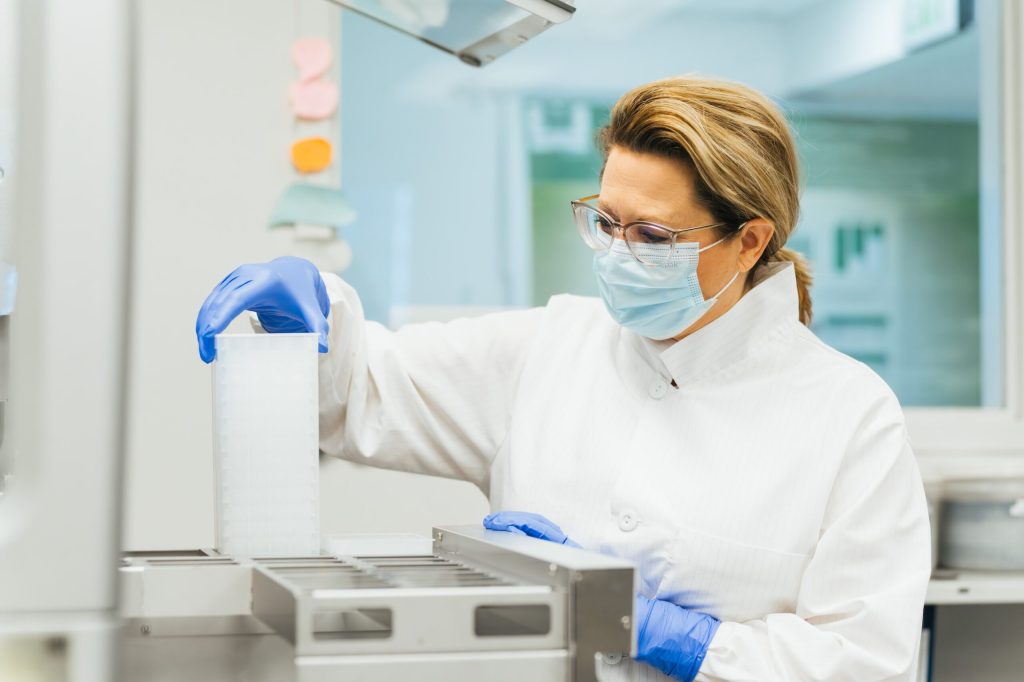
That is the story of both the Marshall University Forensic Science Center and the Master of Science in Forensic Science program. One is an accredited, operational forensic DNA laboratory serving agencies in West Virginia and across the country, while the other is a nationally respected graduate program preparing students for careers in laboratories, crime scenes and federal agencies.
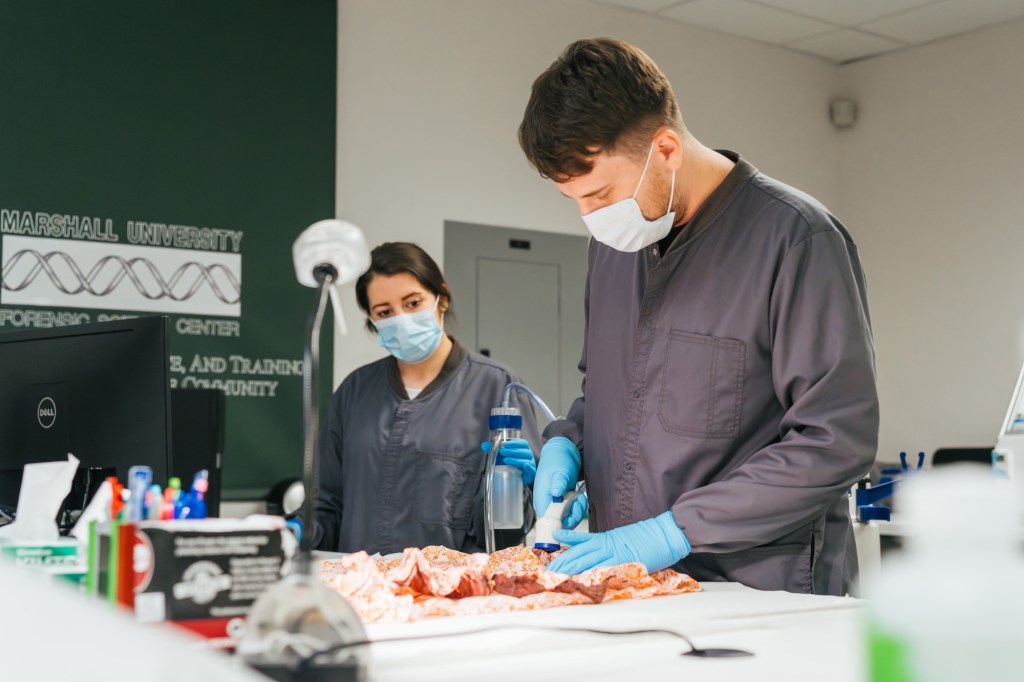
There is the physical intersection, of course, because we are located in the same facility. But the deeper value is that students are learning in close proximity to an accredited, working forensic science laboratory.
Lauren Waugh
Program Director and Associate Professor in Marshall’s Forensic Science Program
That proximity matters — and is what makes the story of forensic science at Marshall equal parts service and education.
“We consistently hear from practitioners who work with our students that Marshall students are unique,” says Waugh. “They are very well-trained and ready when they leave us.”
A Need Becomes a Model
Marshall’s forensic science story did not begin as a branding opportunity or an academic trend — it began with a need.
In the 1990s, West Virginia needed stronger forensic science capacity, better training, and a deeper connection between scientific standards and public service. Dr. Terry Fenger, who began planning the academic program in the early 1990s, became one of the central figures in helping Marshall address that need.
At the same time, leaders in West Virginia law enforcement were seeking partners to help improve forensic work in the state. What started as a request for education and training quickly grew into something larger — a working relationship that helped launch both the educational and testing sides of forensics at Marshall.
Twenty-five years later, the impact of those decisions continues to multiply.
The origin story is essential to understanding what the center is today. Because forensics at Marshall didn’t grow out of theory alone, it grew out of a real-world need for better science, better training and stronger public service.
Jason Chute
Director of the Marshall University Forensic Science Center
It’s that foundation of public service that still shapes the work today.
While the center is an accredited, operational DNA laboratory serving agencies, survivors, families and the justice system, it’s also a place where scientific discovery, public safety and student learning intersect in a way few universities can replicate — making Marshall’s model a rare and special one.
The Weight of the Work
While the center offers many essential forensic services, one of the clearest examples of the center’s public-good mission is sexual assault kit testing.
The work began modestly — with a question of whether Marshall could help test one or two cases, but from there, it grew dramatically. Today, the center has tested and reviewed thousands of cases, including specifically thousands of sexual assault kits from West Virginia and agencies across the country.
But as with most things, the numbers only tell part of the story.
Every kit represents a real person, every case represents a moment someone deserves to have taken seriously, and every result has the potential to support an investigation or provide healing where there had previously been none.
And because of this, the work carries an emotional weight. Analysts often spend their days reading case details, reviewing evidence and handling materials tied to traumatic events.
But it’s that potential impact, Chute says, that makes the field so rewarding.
Just our center at Marshall has helped clear more than 2,500 backlogged sexual assault kits in West Virginia over the past decade. This work directly helps provide answers to cases that have been waiting for resolution. To me, this represents the impact, right? These are real people, including victims and survivors, who deserve answers. We help give them those answers.
Jason Chute
Director of the Marshall University Forensic Science Center
Learning Beside the Real Thing
For students, the connection between the center and the academic program creates an educational experience that is difficult to find elsewhere.
The program — offered as a two-year Master of Science in Forensic Science with emphasis areas such as DNA analysis, forensic chemistry, digital forensics, and crime scene investigation — comes with more than a curriculum. It comes with a purpose.
“I think one of the biggest things is that this program started out of passion,” Waugh says. “The academic program was built because of the laboratory’s mission, so students may be right beside or even involved in aspects of a working laboratory environment. That is a very different experience from learning forensic science only in the abstract.”
For all the sophistication of the work, though, Waugh’s favorite part of the job is still simple: the moment a student starts to understand.
The best moments in the classroom are the ‘light bulb’ moments. When I’m teaching and I can see that something has clicked for a student. That’s what I live for — and really that’s true across our faculty. We love our jobs, and we truly love teaching students. We work to stay current on standards, practices, and expectations in the field, and we hope to pass that work ethic along.
Lauren Waugh
Program Director and Associate Professor in Marshall’s Forensic Science Program
The Marshall Difference
While the work done by the lab is easy to celebrate, the academic program is also measured by something — what happens after students leave.
According to Waugh, the program consistently achieves strong employment outcomes, with an average employment rate of 95-97% within the first year after students leave the program. Often, potential employers will interview two Marshall graduates for the same job and like them both so much that they’ll create a second job to keep both.
This is the multiplier effect of the Marshall model.
Every graduate extends the mission, every employer who asks for more Marshall students reinforces the reputation, and every student who leaves prepared becomes part of the center’s legacy.
There are places where forensic science is taught, and others where it is practiced — at Marshall, those two things happen at the same time. Together, they form a model that is rare in higher education and deeply aligned with Marshall’s mission of service, becoming a place where scientific discovery meets public safety and where the people who sign up to do the hard, yet important work also get a front-row seat to the impact.