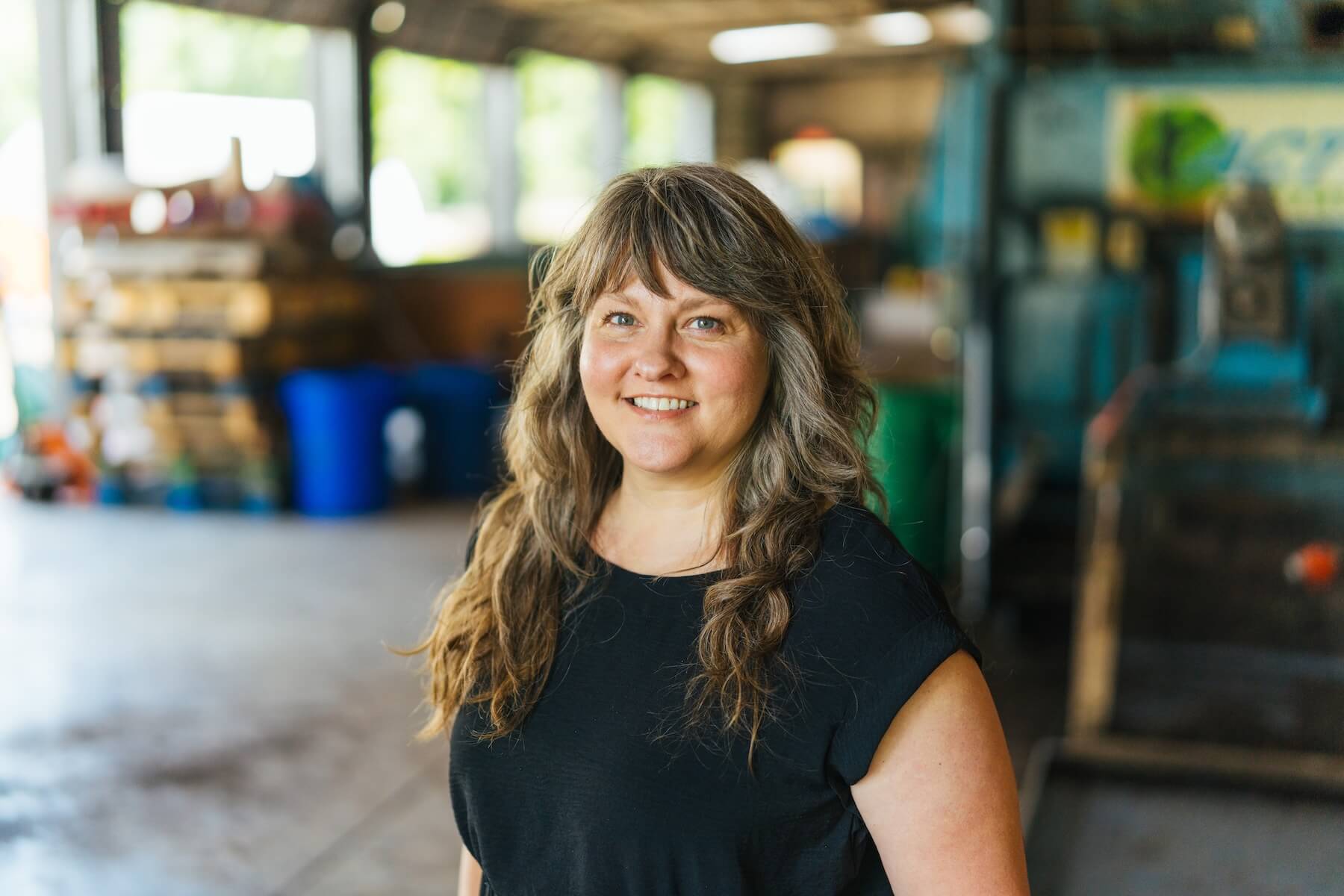
Amy Parsons-White
Sustainability Manager
I have always loved being in nature. My grandparents were farmers, so I was able to see the importance of conservation and sustainability from an early age, though I did not always appreciate the work when I was younger. I majored in biology in college but realized that I wanted to work in conservation and sustainability after working as an environmental consultant and seeing how environmental issues directly impacted the health and economic standing of the people of West Virginia. I was already involved in environmental advocacy and lived as sustainably as I could, but making the connection between the environment, health and economy of a region made me want to work on real solutions.
No. Initially, my plan was to go to medical school. After deciding to go to graduate school instead, I chose to focus on aquatic toxicology and worked on water quality issues. I worked for a while as a consultant to environmental law firms and saw the devastating impact that polluted streams and drinking water have on the people of West Virginia and made the decision then to focus on conservation and sustainability in a way that would directly improve the lives of people through education, workforce and projects that work to build a resilient economy.
Sustainability is a framework known as the “triple bottom line” that includes economic, social, and environmental pillars. When these three pillars are interconnected, they create a system that allows present needs to be met without compromising the ability of future generations to meet their own needs. This framework can be applied to businesses, projects and our personal lives. Put simply, a company/project/community will be sustainable if it promotes economic growth while preserving natural resources and ensuring access to necessities and a high quality of life to all people.
In general, I am proud of the growth of the department as a whole and the reach that we now have, both on campus and off. As far as individual programs go, the compost facility and the campus thrift store are two programs that are perfect examples of sustainability.
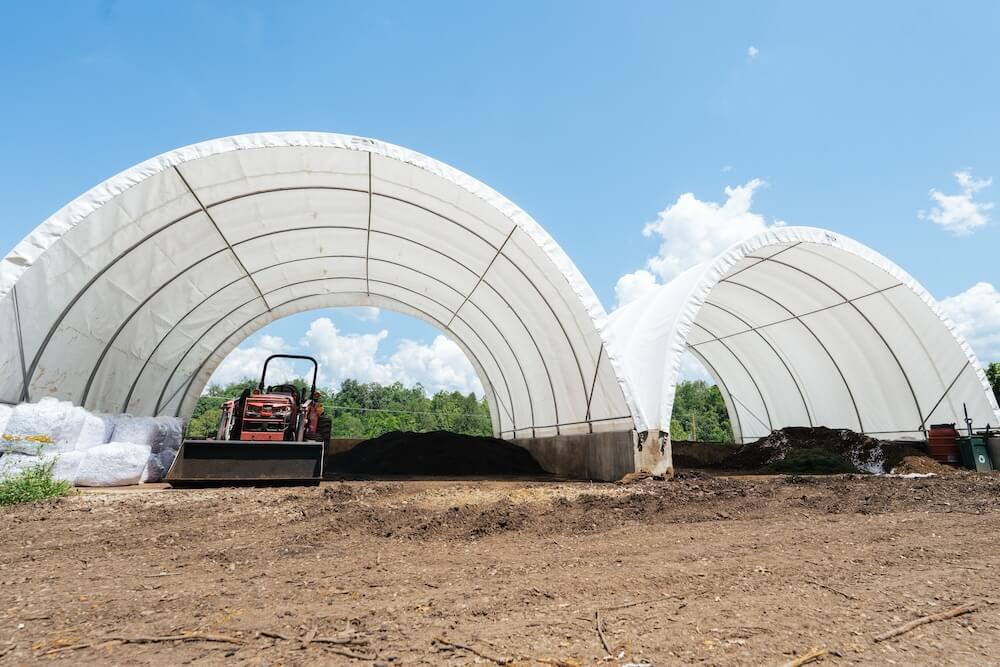
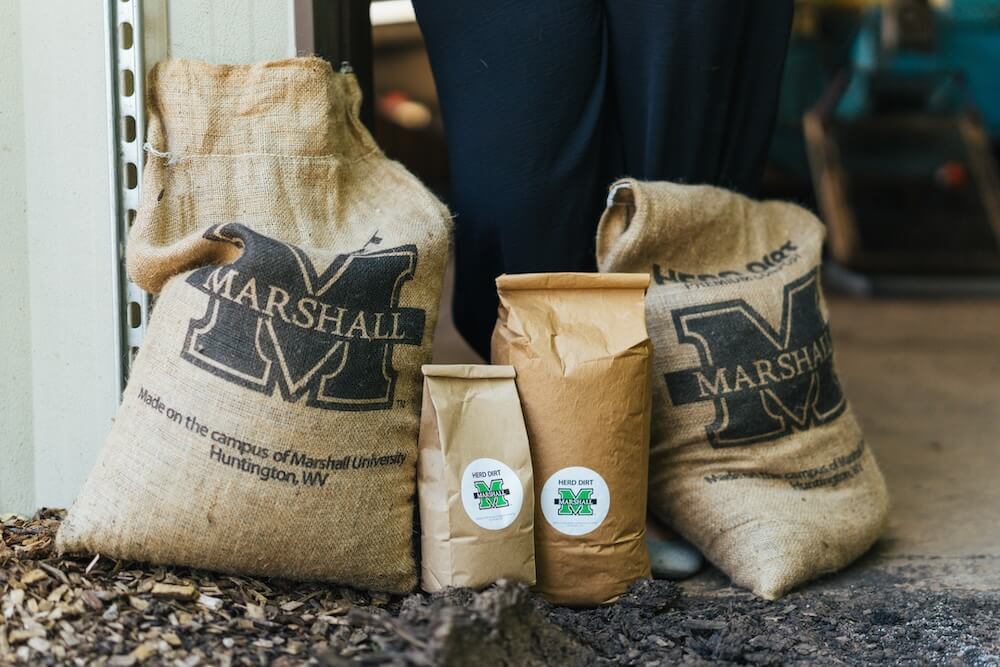
The compost facility takes food waste, office paper, lawn waste, and cardboard from campus, saving waste haul fees and saving landfill space, and produces Herd Dirt Premium Compost, a product that is sold to produce revenue for the university and used on campus and in the community to amend and build healthy soil. The program is also used as a workforce development location, teaching employment and life skills to community members through a partnership with Coalfield Development.
The thrift store is a campus-focused program that takes donations from community members and through Green Move Out, a partnership with Housing and Residence Life. During Green Move Out, donation bins are placed in residence hall lobbies and students can donate items that they no longer want or need. These items are then placed in the thrift store for students, faculty, and staff. There are no prices on items in the thrift store. Instead, shoppers purchase a reusable shopping bag for three HerdPoints and can then take whatever they need from the store. When a shopper returns with their reusable bag, the cost is reduced to one HerdPoint to shop in the store. This program has allowed the university to reduce waste at move-out, provide much-needed clothing, school supplies, and small appliances to our students, and
Sustainability and resilience are mutually reinforcing. Resilience is a feature, while sustainability is the goal. Resilience is the ability to respond and rebound quickly from difficulties while sustainability is the ability to maintain a certain level of success. The Marshall University Appalachian Resiliency Center is dedicated to helping communities across Appalachia overcome challenges and thrive. Our vision is to empower the region to rebound swiftly from economic and environmental hardships, emerging stronger and more resilient than ever. Our mission is to collaborate with local, state, and national partners to create resilient solutions for both anticipated and unforeseen challenges.
The compost facility has been our biggest undertaking, by far. It has taken seven years to work through legislative changes to allow post-consumer food waste composting, permitting, funding and design. It was a lot of work that included long hours of research, visiting other university compost facilities, and meetings with university and state government leadership. Anytime you are doing something that hasn’t been done before, it is going to be challenging, but I can say that it has all been worth it. Now that the facility is operational, we are still learning, streamlining, and working daily to make the facility more efficient while making the highest quality compost possible.
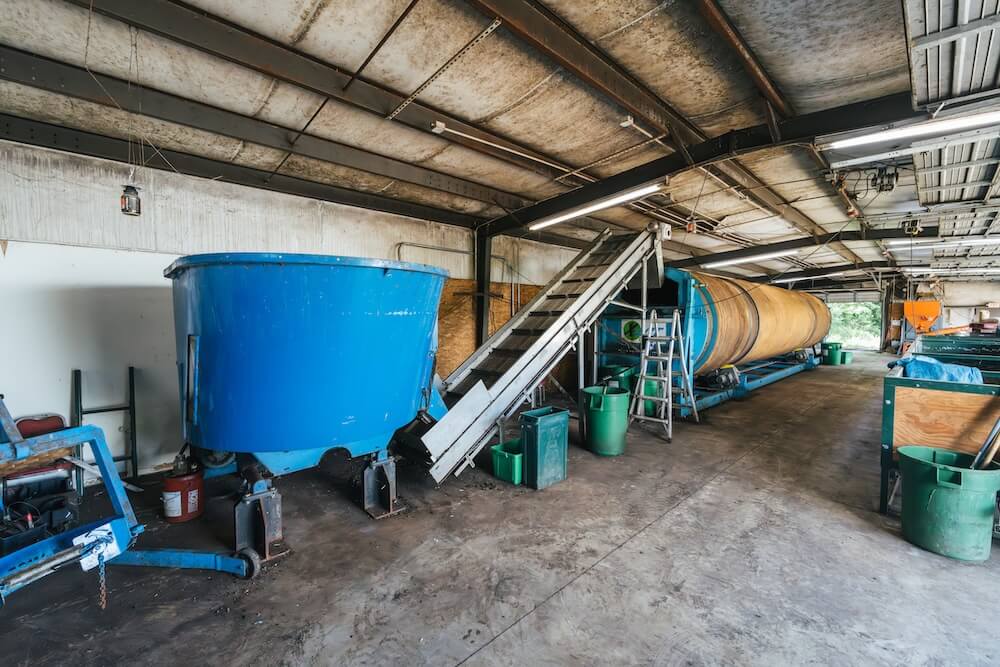
Our digester is an XACT Systems Bioreactor. It’s an aerobic, meaning with air, digester that can take in five tons of feedstock per day and discharge three tons of compost per day when fully loaded. The digester itself is not high tech. It is a 7×40 steel drum that rotates 10 times per minute and shields the compostable materials from all environmental variables that can slow the composting process.
The naturally occurring microbes in the compostable material do their jobs to break down the organic material, causing the material to heat up. The insulated drum helps to hold the temperature steady at about 140 degrees Fahrenheit. This allows the material in the drum to compost more evenly and quickly than traditional composting. It also ensures that the finished compost is pathogen free due to the time spent at high temperatures.
Herd Dirt was recently tested by the Agriculture Analytics Lab at Penn State University and was found to be pathogen-free and in the highest tier of quality for compost. We are in the process of submitting the report to the U.S. Composting Council for official Seal of Testing Assurance (STA) Certification meaning that the compost is high quality and meets strict EPA limits for heavy metals and pathogens, ensuring safety for lawns, gardens and agriculture.
We are currently selling Herd Dirt Premium Compost in bags at The Wild Ramp in Huntington and in bulk by filling out the request form.
It means so much. My team and I have worked very hard over the years to develop a diverse sustainability program. Looking beyond environmental sustainability to incorporate workforce development and recovery has positioned Marshall to make a real difference, not only in waste and carbon reduction, but also in the local economy and, most importantly, in the lives of people in our region. The work we do in the Sustainability Department is deeply personal — we are all here because we care about the people of Appalachia, our environment, and our economy. That keeps us in an innovative mindset so that we can adjust and grow to meet the needs of our community.
Our students are our future leaders, so having them involved in programs that reduce waste while supporting healthy communities and a growing economy is incredibly important. Being involved by volunteering, being a student worker, or through an internship allows them to gain awareness of how resilient and sustainable programs work and set our communities and businesses up for long-term success.
I am a huge advocate for getting your hands dirty. There is a lot of research that shows the benefits of gardening and working in the dirt on mental health. As an added bonus, you get fresh produce to eat. Working and volunteering in the student garden can offer students the relief they need to deal with the stress of classes, finances, and everything else that comes with being a student. It can also build healthy habits when dealing with stress in life. Additionally, students learn how to grow their own food, which is an invaluable lesson that most do not have an opportunity to learn. There is something very satisfying about planting a seed and watching it grow to produce food that you then get to eat. It requires hard work, patience, and care — all things that can be applied to different situations in life.
I hope that they carry an understanding of the deeper meaning of sustainability. Recycling and reducing consumerism are good places to start, but they are the tip of the iceberg. Focusing on people and their wellbeing is the ultimate way to live a truly sustainable life. Regardless of academic major or the type of job someone ends up with in the long run, if we create programs and businesses that work to have a positive impact on quality of life — including healthcare, workforce and food production, and pollution reduction — we will all be successful.
I am excited to think about how our programs will grow and the reach they will have in the future. We are laying the groundwork for statewide workforce and economic development through resilient and sustainable projects in agriculture, advanced energy production, waste reduction and transportation. It is exciting and inspiring to think about what these programs will look like in five years and the impacts they will have on the economic landscape of West Virginia.