When Herb Stanley arrived at Marshall University in the fall of 1981, he was a small-town kid from Point Pleasant trying to figure out where he fit in.
That search led him to Greek life, joining the Alpha Sigma Epsilon fraternity – and, not long after, to a bar that would become legendary among Marshall students.
In January 1982, Stanley took a part-time job at The Varsity. What started as weekend work quickly became something more. By the summer of 1983, while still a student, Stanley would hold the keys to the place – becoming the owner at just 20 years old.
A legendary beginning
The Varsity was already an institution when Stanley found it. Built in 1964, the bar sat on the land where Joan C. Edwards Stadium now stands and was known as the place for fraternities and sororities to gather.
“It was legendary,” Stanley said. “Every night in the place, there were letters everywhere.”
He still remembers walking in for the first time.
“The first time I ever walked into that bar, I thought it was the coolest place I had ever been in,” he said. “Remember, I’m from a small town, so to get a job there – I can’t describe how cool it was.”
He started working there in January 1982. By the summer of 1983, the owner was clearly worn down, and Stanley saw an opportunity. He initially approached him about leasing the bar. Just days later, paperwork covered the bar top.
Before moving forward, Stanley called his brother-in-law, who owned a bar in Gallipolis, Ohio. That conversation changed everything.
“He said, ‘Why don’t you buy it?’” Stanley recalled.
The idea seemed impossible – until it wasn’t. Stanley had money set aside from land left to him after his mother passed away when he was a child. He used it as a down payment, and the owner agreed to finance the rest.
On Aug. 1, 1983, the deal was done.
“I handed him a check, and he handed me the keys,” Stanley said. “And the rest is history.”
There was a steep learning curve.
“I didn’t know how to do anything when I bought it, except to run a cash register, sweep and mop and pack
beer,” he said. “I had never owned a checking account before, so there was a lot of learning.”
There was also no shortage of work.
“For the first couple of years, I probably worked seven days a week from open to close,” Stanley said. “You have to work it. In a bar, if you’re not there — you can forget about it.”
More than a bar
During his seven years as owner, The Varsity became inseparable from Marshall’s Greek community. Stanley leaned fully into that identity, making the bar a gathering place where students felt ownership and belonging.
He sponsored Greek Week every year he owned the bar, purchasing trophies, T-shirts and prizes, and supporting events that brought the campus together.
“It was their bar,” he said. “That’s what it was.”
The Varsity wasn’t just about selling beer — it was about shared experiences. Some of the most lasting memories weren’t loud or planned at all. After closing time, a small group of Stanley’s close friends would settle into a booth with a game of Trivial Pursuit, talking and laughing until daylight.
“I’d be done and want to go somewhere else,” Stanley said with a laugh. “They’d sit there and play until morning.”
When he came back the next day, the empty beer bottles were lined neatly on the bar — each one with a dollar bill tucked underneath.
When plans for the new football stadium meant the building would be torn down, Stanley knew it deserved a proper goodbye.
“We had a party from 1 to 6,” he said. “In five hours, we went through 14 kegs of beer. It was just a nice sendoff.”
“They bulldozed me down,” he added, “which was really hard.”
Building The Union
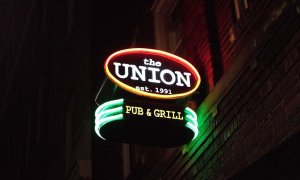
In 1991, Stanley opened a new chapter – and a new space – on Fourth Avenue: The Union.
“I named it after the student union because it means meeting place,” he said.
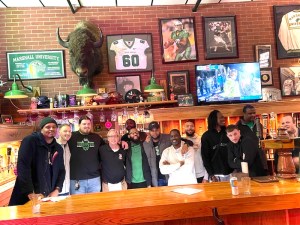
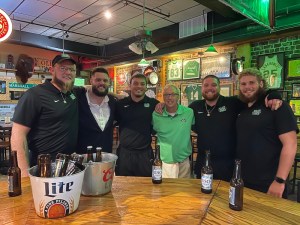
Later moving to a new location down the street and changing names to The Union Pub and Grill, the place was filled with Marshall memorabilia – a living scrapbook of the university’s history. Its walls were covered in memorabilia that told the story of generations of students and athletes. When Stanley sold the bar decades later, he intentionally left nearly everything behind so the space would remain familiar to those who loved it.
He took only a handful of deeply personal pieces home – including a rare original photograph of the 1970 Marshall football team lost in the plane crash.
“There’s only like four of those original pictures anywhere,” he said. “So I took that one with me.”
The Union drew attention far beyond campus. CBS cameras stopped in during football weekends. Politicians dropped by. Visiting teams, airline crews and fans made it part of their Huntington routine.
Wednesday nights became a tradition of their own. Trivia night at The Union drew a loyal mix of students and locals, filling the room week after week. The questions weren’t easy – and that was part of the appeal.
“The questions were hard,” Stanley said. “That’s what made it fun.”
It became one more reason people returned again and again, building friendships over friendly competition and shared knowledge, and reinforcing The Union’s reputation as a true meeting place for the Marshall community.
And then there were the moments no one would expect.
One Saturday evening, after a family held Mass in his banquet room, Stanley’s priest, Monsignor Lawrence Luciana, stayed afterward and stepped behind the bar with him.
“That was really neat,” Stanley said. “I liked that.”
For Stanley, the draw was never just the memorabilia.
“I was good to people. I talked to people,” he said. “I treated people well – especially if they’d never been in there before and they were out of town.
“They knew they were safe. They knew they would be taken care of. And it was a fun, enjoyable place.”
He’d ask where they were from. He’d send them home with a story. Often, that hospitality came with a signature creation: the Southern Belle. Stanley created – and trademarked – the drink himself. While he won’t give away the recipe, it features peach schnapps, a Canadian whiskey and an energy drink.
“Quite tasty,” he said.
The Marshall Family
Over 42 years between The Varsity and The Union, Stanley met thousands upon thousands of students, alumni and athletes. He watched students grow up – and later watched their children walk through the same doors.
“At my age, I’ve got people who were customers whose kids come in now,” he said.
In 2024, he traveled to Cary, North Carolina, to cheer on Marshall Soccer in the NCAA College Cup Championship Match. He couldn’t go anywhere without someone calling his name.
“Most of them were Varsity patrons I hadn’t seen since then,” he said. “There were so many I couldn’t believe it.”
That sense of connection came full circle during one of the most difficult times of his life. While dealing with cancer, Stanley saw firsthand how deeply he was woven into his community.
“There were times I’d be in the emergency room,” he said, “and someone would come in and say, ‘You know someone named so-and-so?’ And next thing I know, I’m in a private room.”
The kindness he had shown for years was being returned.
A new chapter
Stanley sold The Union in October 2025, ready – as he put it – because “I was burnt. I was done. I was ready.”
But retirement didn’t stick.
“I knew when I sold, I had to do something,” he said. “I’m not going to just sit on the couch.”
Today, he tends bar a few evenings a week at Calamity J in Huntington. He leaves work by 11 p.m. There’s no payroll to meet, no inventory to track, no late-night worries.
“When I get in my truck and go home, I don’t have a worry in the world,” he said. “Which is so nice. But I’m back in the game.”
He still sees the regulars. He still hears the stories. He still builds community. Looking back, does he ever stop and think about what he accomplished at just 20 years old?
“One of my buddies said, ‘We were all just kids, and you were relying on us,’” Stanley said. “And I never thought about it that way until he brought that up. And it’s the truth.”
For generations of Marshall students, The Varsity and The Union were more than bars. They were gathering places. They were meeting places. They were home. And at the center of it all was a young student from Point Pleasant who decided to go for it.
“If you think it’s something you want to do,” Stanley said, “go for it. Nothing is impossible.”